


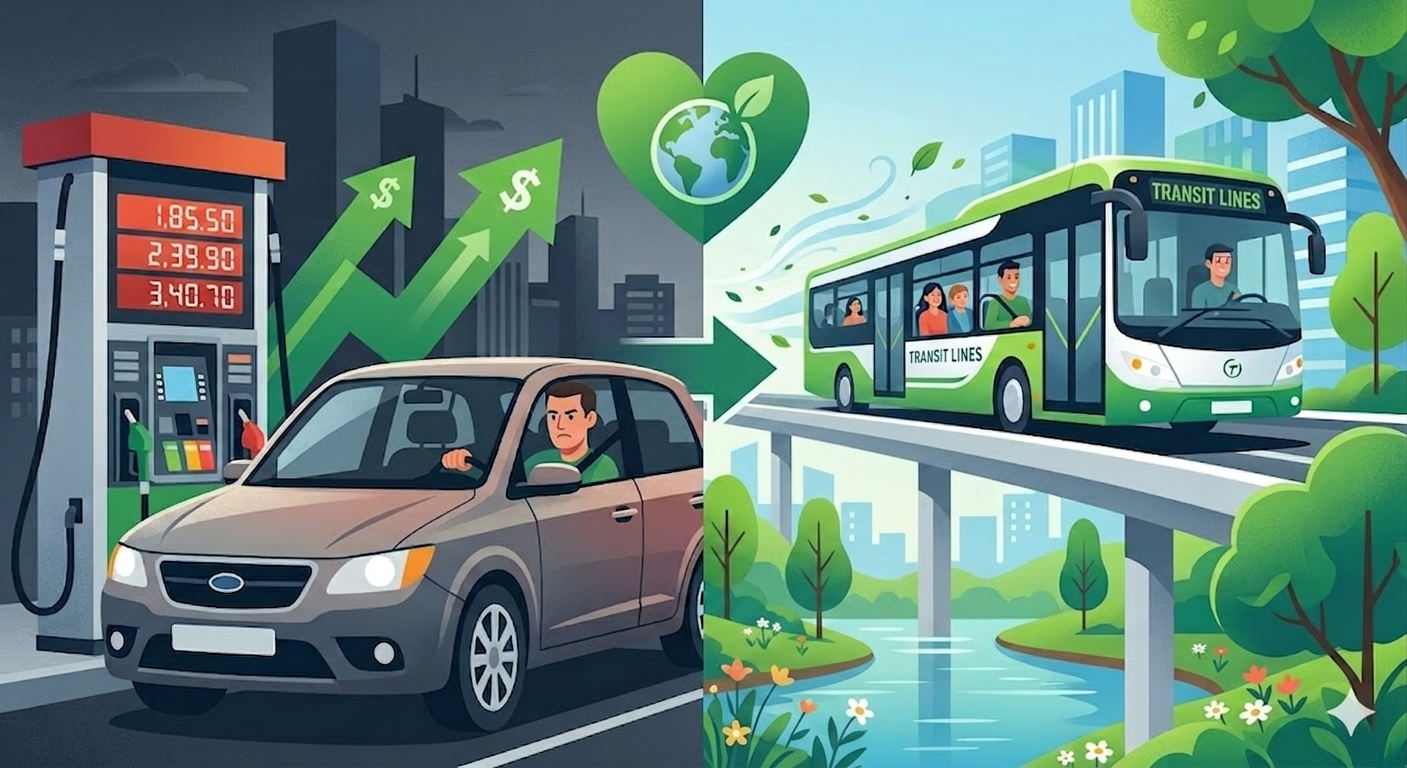
It’s a scene played out at gas stations across the country: drivers staring in disbelief at the climbing digits on the fuel pump. As global supply chain shifts and economic pressures push gas prices to uncomfortable highs, the "cost of commuting" is no longer just a figure of speech—it’s a significant hit to the monthly budget.
However, the rising cost of fuel is providing a much-needed catalyst for a lifestyle shift that benefits both your wallet and the planet.
The Real Cost of Driving
When we think about gas prices, we often focus on the price per gallon. But the true cost of car dependency includes:
- Fuel Volatility: Constant price fluctuations make monthly budgeting nearly impossible.
- Maintenance Wear-and-Tear: More miles means more frequent oil changes, tire rotations, and repairs.
- Carbon Footprint: Personal vehicles are a leading contributor to CO2 emissions, accelerating the climate crisis.
Nature is Breathing—Will You Help?
Every time you choose a bus or train over a solo car trip, you are making a direct investment in the environment. Public transit significantly reduces the number of vehicles on the road, leading to clearer skies and less urban congestion. It is one of the most effective ways an individual can lower their personal carbon output.
Take the Stress Out of the Shift with the "Transit Lines" App
The biggest barrier to using public transportation is often the "fear of the unknown"—not knowing when the bus arrives or which train to transfer to. That’s where the Transit Lines app comes in. Download it now from the links above in the header.
The Bottom Line
Gas prices may be out of your control, but how you respond to them isn't. By switching to public transit and using Transit Lines to navigate your city, you can reclaim your budget, reduce your stress, and give nature a fighting chance.
Download Transit Lines today and start saving—for yourself and for the earth.